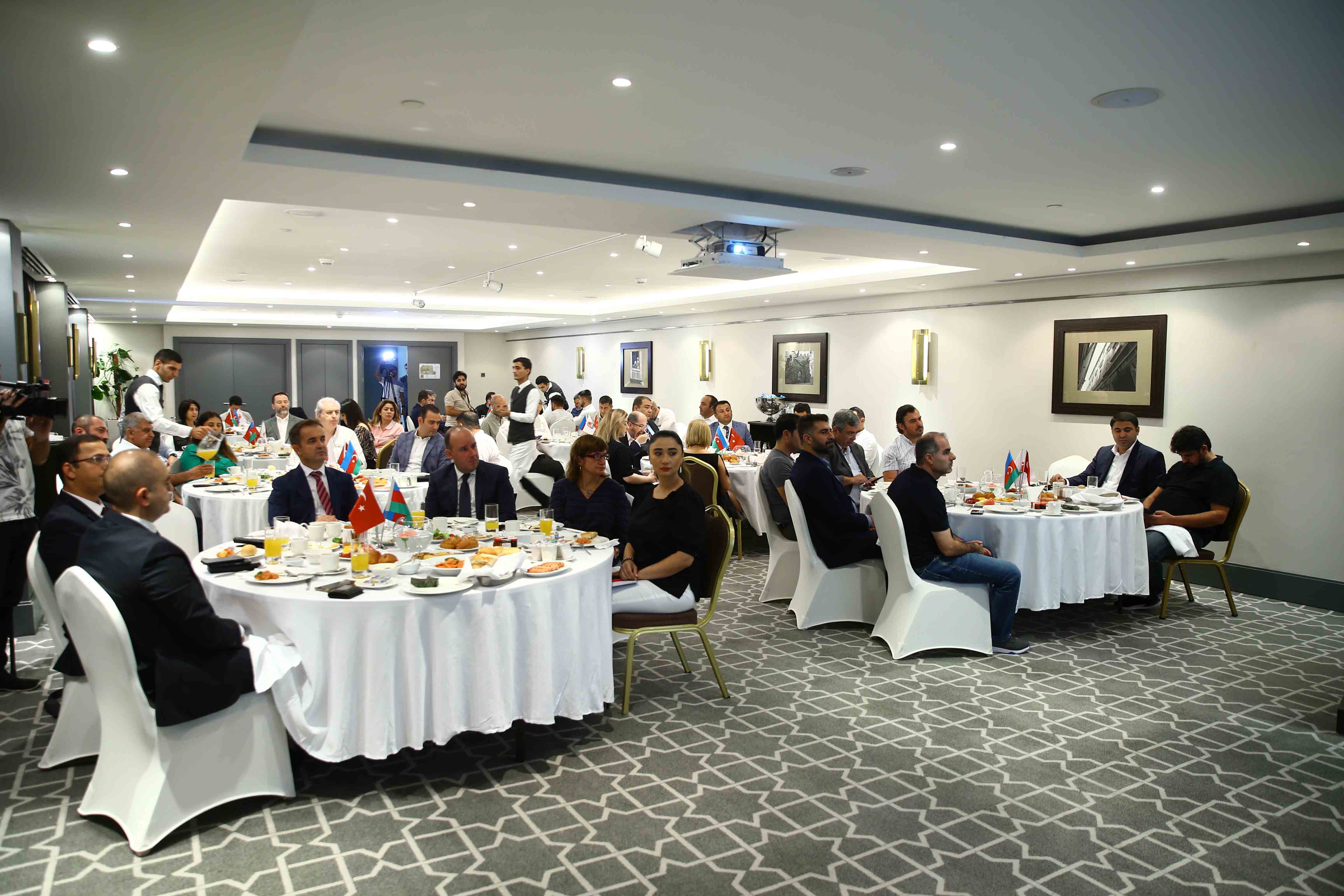
The meeting addressed key issues related to the development of quality infrastructure and digital governance, emphasizing the importance of fully aligning the quality ecosystem with WTO requirements and further improving it based on international best practices.
A meeting was held at the State Service for Antimonopoly and Consumer Market Control under the President of the Republic of Azerbaijan within the framework of the technical assistance project entitled “Support to the Government of Azerbaijan on WTO Accession Negotiations and Trade-Related Activities, Strengthening Quality Infrastructure and the Digital Governance System”. The meeting was attended by representatives of the State Service, the Ministry of Economy of the Republic of Azerbaijan, and the Azerbaijan Standardization Institute (AZSTAND), operating under the State Service for Antimonopoly and Consumer Market Control, as well as international experts.
Ilgar Hasanov, Adviser to the Chairman of the State Service; Gulchin Alasgarova, Deputy Head of the Trade and Foreign Investment Division of the Ministry of Economy; Daniela Klejanu, Lead Consultant on Quality Infrastructure and Trade Facilitation; and Marius Bordalba, Consultant on International Trade and Arbitration, delivered presentations at the meeting. The presentations provided information on the objectives and scope of the technical assistance project, financed by the European Union and implemented over a period of 36 months. Discussions focused on aligning trade and investment policy with international requirements, as well as on the development of quality infrastructure and digital governance systems.
The meeting also addressed the current state of quality infrastructure in Azerbaijan, reforms implemented in this area, improvements to the legislative framework, adopted standards and draft technical regulations prepared. The importance of fully aligning the quality ecosystem with WTO requirements and further improving it based on international experience was emphasized.
During the discussions, the need to complete the initial phase of the project and transition to the implementation phase was highlighted. The importance of preparing a detailed action plan covering specific areas of activity in this field was also noted.
At the conclusion of the meeting, the parties agreed to continue joint cooperation under the project and to implement coordinated activities in a phased manner and within realistic timelines.